
The car drifts when you relax your grip
On a flat, straight road it should track. Drift means the thrust angle or the front camber has moved, and you've been correcting for it without noticing.
Mon - Thu 8:00 AM - 5:30 PM
Fri 8:00 AM - 5:00 PM

Wheel Alignment
Alignment is three angles per corner measured in fractions of a degree. We put the car on the rack, show you the numbers it came in with, and show you the numbers it leaves with. Tires are the most expensive thing a bad alignment quietly destroys.
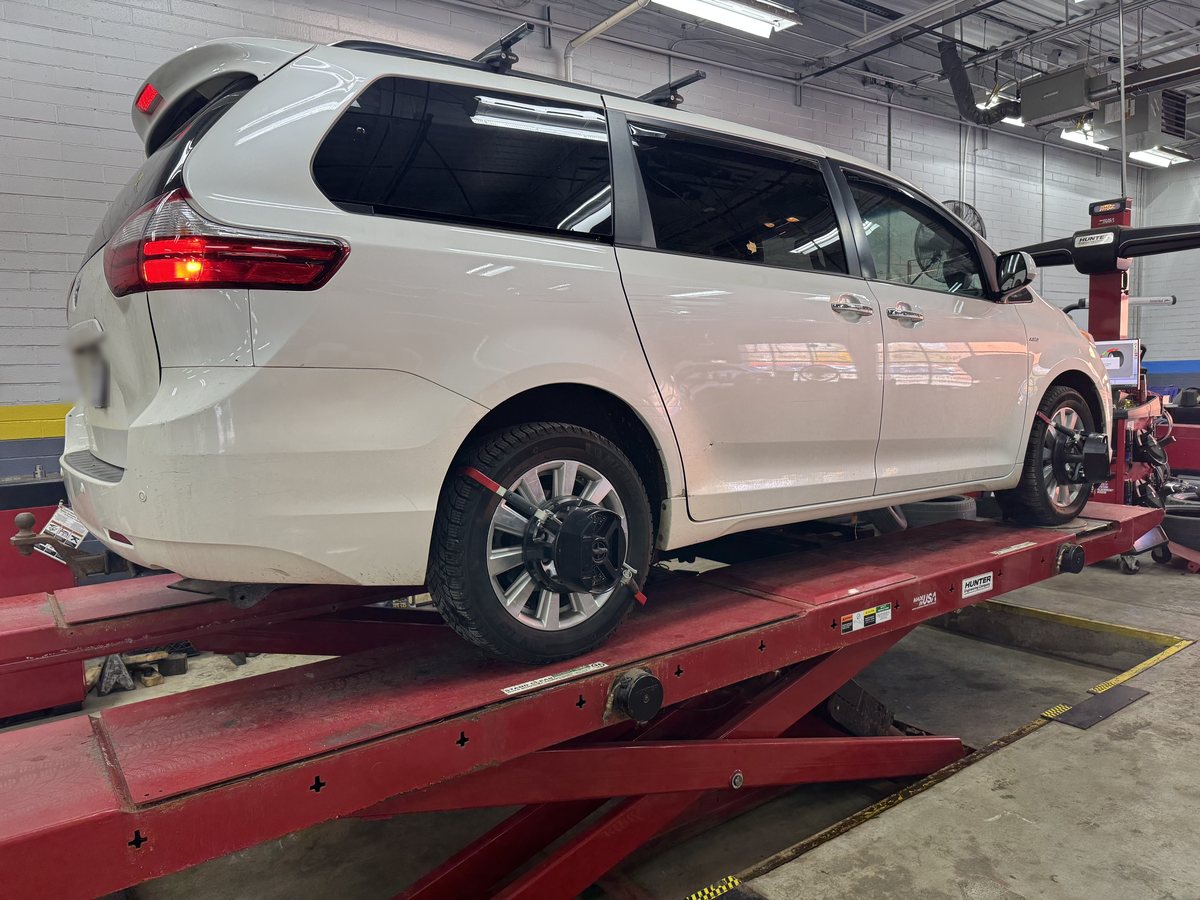
What It Feels Like
A Michigan winter of frost heave and patched pavement moves alignment more reliably than anything else. Here's what that feels like from the driver's seat.
On a flat, straight road it should track. Drift means the thrust angle or the front camber has moved, and you've been correcting for it without noticing.
The wheels are pointed straight but the wheel isn't. That's toe distributed unevenly between the two sides, and it's a five minute fix on the rack that people live with for years.
Camber wear. A strip of tread gone on the inside or outside shoulder while the rest still looks new. Once that shoulder is down, the alignment fixes the cause but not the tire.
Run your hand across the tread. Smooth one way and sharp the other is a toe problem scrubbing the tire sideways every single mile.
One good impact on a Michigan road is enough. If something changed the day you hit it, it changed in the suspension geometry.
The cheapest time to align a car is the day the new tread goes on. Aligning afterwards protects them; aligning a year later just tells you why they're already worn.
On The Rack
The measurement is quick. The inspection before it's what makes the measurement worth anything.
Alignment is measured through the tires. Uneven pressures or mismatched tread change the readings, so those get set before the targets go on.
Tie rods, ball joints, bushings and wheel bearings checked for play. Worn parts get reported before any adjustment is made.
All three angles on all four corners against the manufacturer's spec. You see the before reading, in red or green, not a description of it.
Toe, and camber and caster where the design allows adjustment. Some vehicles need aftermarket hardware to correct camber and we'll tell you if yours is one.
The after reading printed alongside the before, then a straight-road test to confirm the wheel sits centered and the car tracks.
Worth knowing
The rear of the car sets the line the front has to steer to. If the rear axle points slightly off the centerline, the only way to drive straight is with the wheel held off center, and no amount of front end adjustment fixes it. That is why the reading we take first is the thrust angle.
The Three Angles
An alignment sheet has three angles on it per corner. They are not interchangeable, they fail for different reasons and they wear tires in patterns you can see. Here is how to read your own printout.
All of it is printed before and after, so you can see what came in and what left. That sheet is also the argument for doing an alignment after suspension work rather than hoping: replacing a control arm or a strut moves these angles whether anyone intended it to or not.
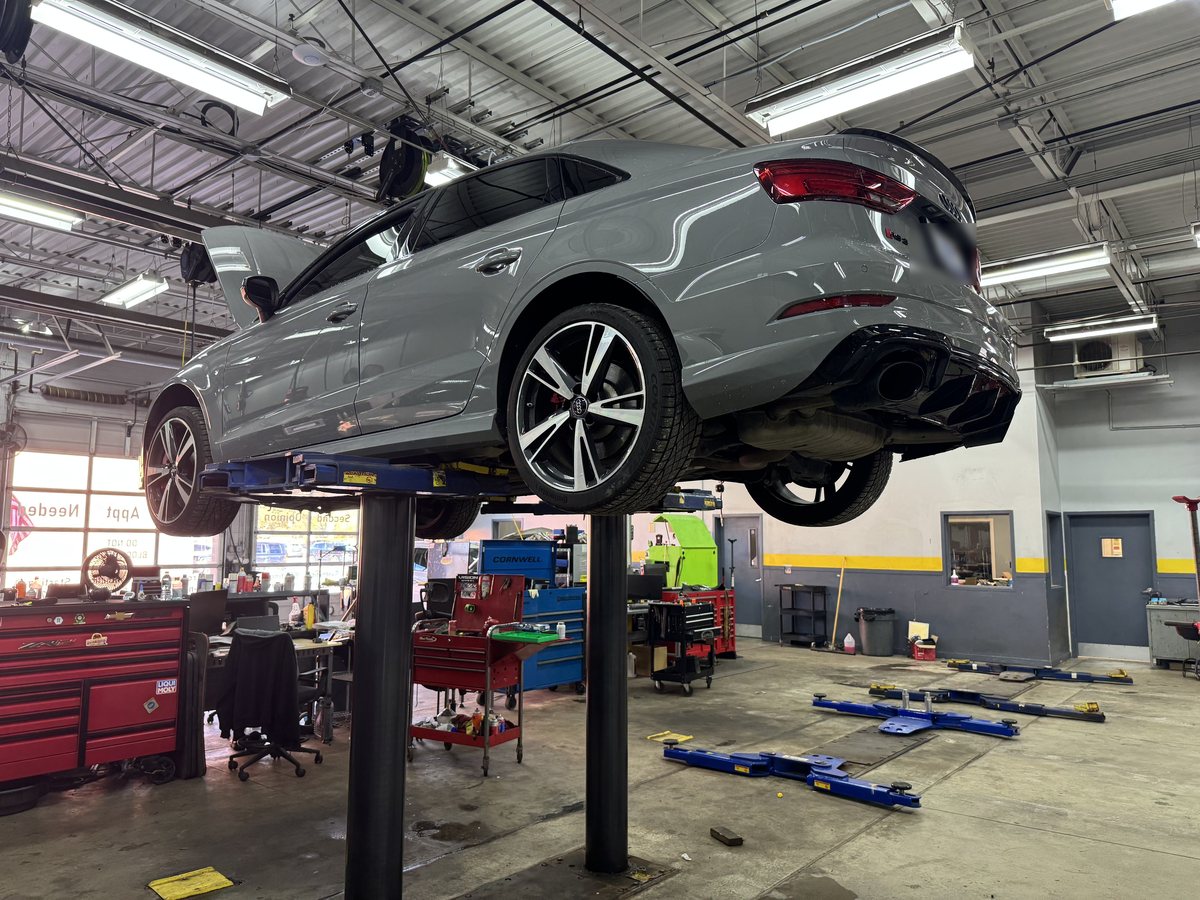
The Three Angles
Toe is whether the wheels point slightly toward each other or away, viewed from above. It's the angle that destroys tires fastest, because a wheel out of toe is being dragged sideways at every mile you drive.
Camber is the lean of the wheel seen from the front. Out of spec, it puts the load on one shoulder of the tire instead of across the tread, which is the strip of bald rubber on an otherwise good tire. Caster is the steering axis angle, and it governs how the car comes back to center and whether it pulls.
None of it can be set correctly on worn parts. A loose tie rod end or a tired control arm bushing moves under load, which means the rack reads one number standing still and the car does something else at 60 mph. We inspect the suspension first, and if something is worn we tell you before the alignment rather than after.
Alignment is often the last step of a bigger job. Worn suspension parts move the wheel around no matter how carefully the angles are set, so we check ball joints and tie rods first, and a car that pulls only when you brake is a brake problem, usually a dragging caliper, not an alignment problem. New tires are the other common trigger, since an alignment protects the money you just spent on them.
What You Get
Questions
In Their Words
★★★★★
Igor took the time to listen and ensured my alignment was done to the exact specifications I requested.
★★★★★
No one will ever like paying a lot to have their vehicle repaired, but when the service and quality of work align, it's a happy medium. I'm very satisfied with the work they performed on my Porsche Cayenne S Hybrid. There advancements in electronic report diagnostic sent to the customer with sign off consent to perform work, is far greater than I've seen in dealerships. Pleasure doing business with you guys!!!
Book It
Get it on the rack and see the actual numbers. 29444 Woodward Ave, Royal Oak. Book online or call and we'll fit you in.