
The car keeps moving after a bump
Press down hard on a corner and let go. It should settle in one motion. If it bounces two or three times, that shock or strut has stopped damping.
Mon - Thu 8:00 AM - 5:30 PM
Fri 8:00 AM - 5:00 PM

Suspension & Steering
Suspension is what keeps the tires pressed against the road. When it wears out the car doesn't usually break down, it just stops doing the things you stopped noticing it did: holding a line, stopping straight, wearing tires evenly.
What Wear Feels Like
Suspension degrades slowly enough that you adapt to it. That's exactly why it's worth having someone else look.
Press down hard on a corner and let go. It should settle in one motion. If it bounces two or three times, that shock or strut has stopped damping.
Worn front struts let weight transfer forward much further and faster. It lengthens stopping distance and it eats front brake pads.
Play somewhere in a joint or a bushing, most often a sway bar link or a control arm bushing. Cheap to fix as a noise, expensive if a ball joint is the one that's loose.
Regular dips around the tread, like scallops. That's a tire bouncing rather than rolling, and it means the damper is no longer controlling it.
Worn tie rod ends or ball joints mean your steering input gets used up taking slack out of a joint before the wheel turns.
Springs sagging or dampers finished. The car feels like it's negotiating rather than following your inputs, and in an emergency lane change that matters.
Part By Part
Suspension gets talked about as one thing and it is a dozen parts doing separate jobs. Each of them announces itself differently, which is how an inspection narrows down a clunk instead of replacing the corner.
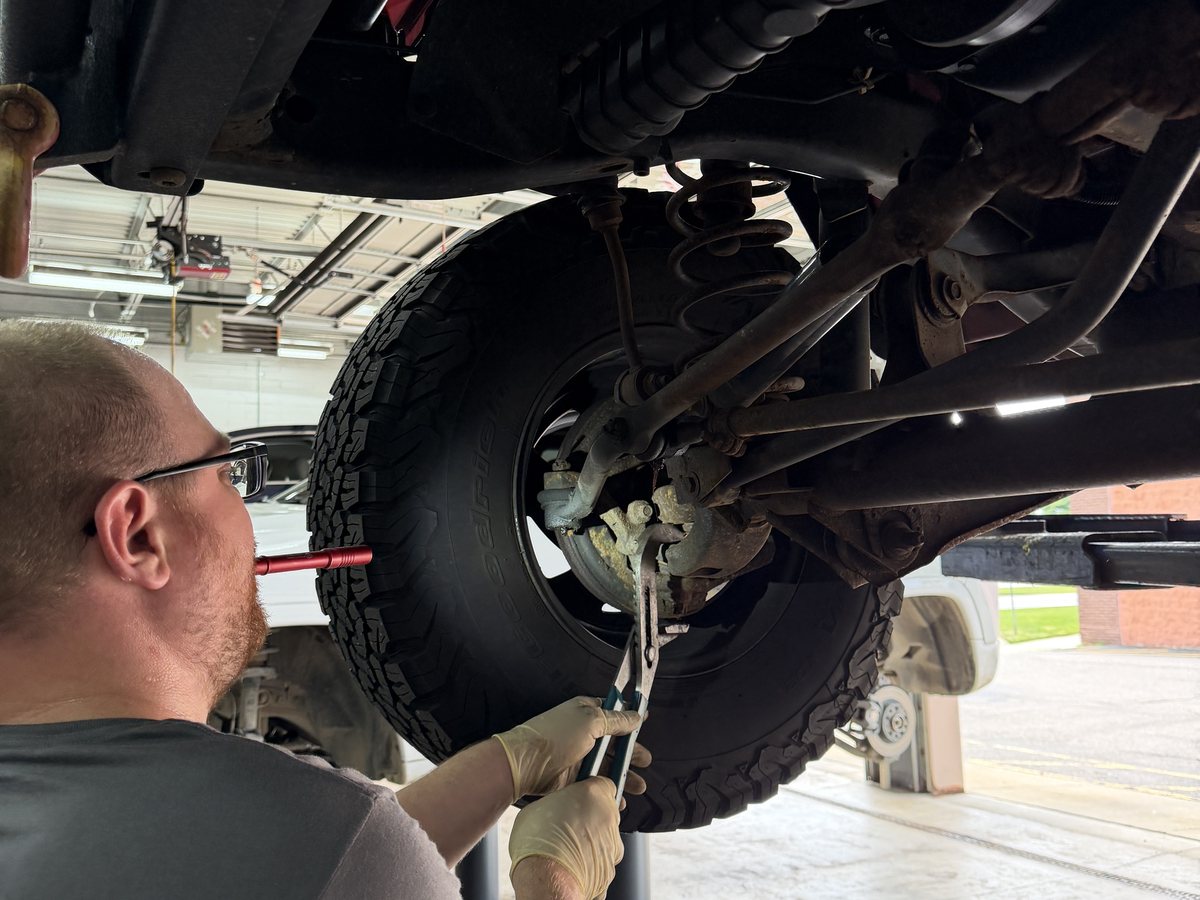
A clunk is not a diagnosis. We put the car on a lift and load each joint in turn with a pry bar, which is how you tell the part that has play from the three parts near it that do not.
Shocks Versus Springs
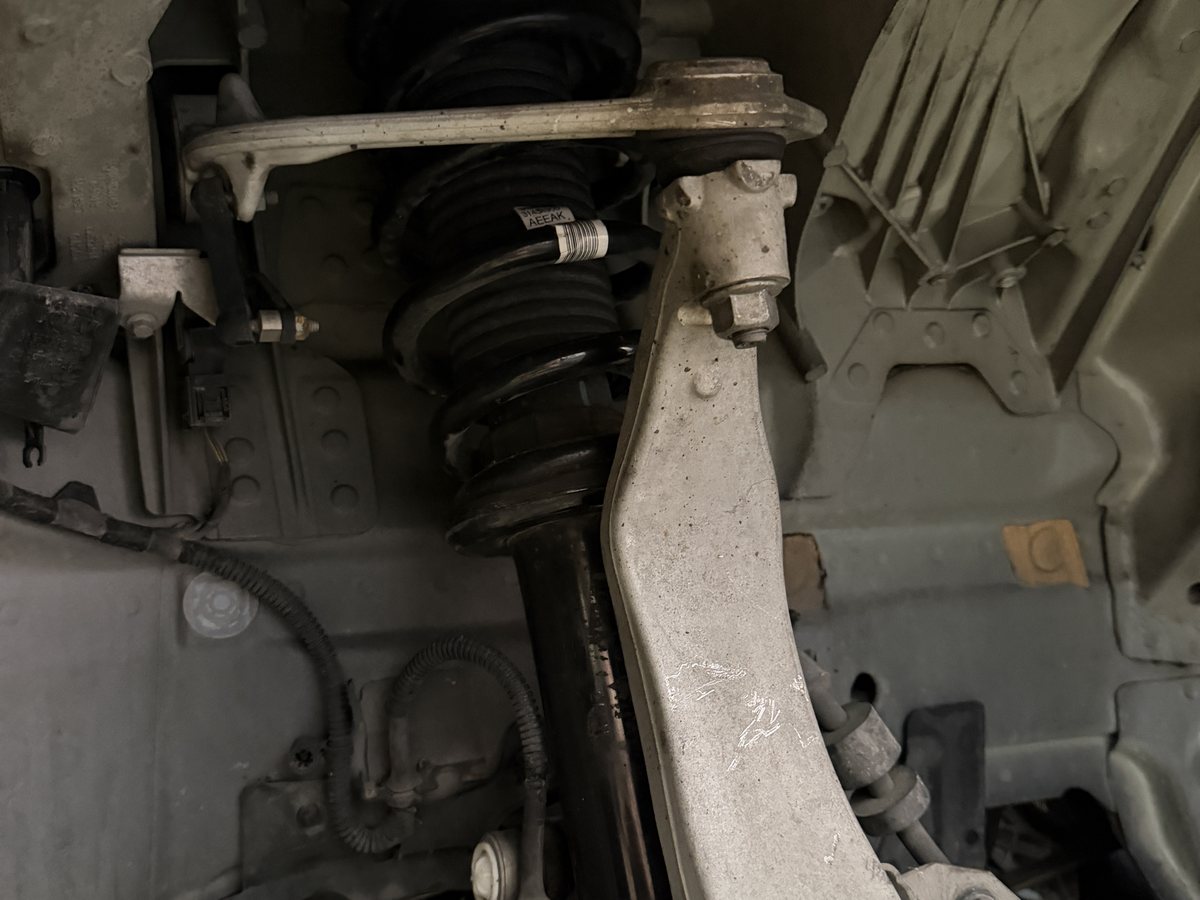
The spring carries the weight of the car. The shock or strut controls what the spring does next. Without damping, a spring that gets compressed by a pothole keeps oscillating, and the tire keeps leaving the road surface on every rebound.
That's why worn dampers show up as tire wear and longer stopping distances rather than as a noise. A tire that's in the air isn't braking, not steering and not gripping, and it's doing that many times a second on a rough road.
Michigan is unusually hard on the rest of it. Road salt attacks the steel of control arms, subframes and spring seats, and a bushing that's perished lets the geometry move under load even when nothing is obviously broken. When we inspect, we are looking for corrosion and play as much as for leaking dampers, and we'll show you the part on the car rather than describing it at the counter.
Suspension work almost always ends with an alignment, because replacing a control arm or strut changes the angles the tires ride on. Uneven tire wear is usually the first sign something is worn, and a clunk that only happens when you brake is a brake hardware problem rather than a suspension one. Most of what we find starts at an oil change inspection.
Worth knowing
The springs do that. A shock or strut controls how fast the spring is allowed to move, which is why a worn one does not make the car sag. It makes the car keep moving after a bump, and it lengthens your stopping distance, because a tire that is bouncing is a tire that is not always touching the road.
What You Get
The Inspection
Suspension is one of the areas where showing you the part matters more than explaining it.
We drive it and feel what you're feeling, then check body control at each corner before it goes up.
Play in ball joints, tie rods and bushings only shows under the right load. Checking one way misses half of it.
A damper with oil down the body has failed. Salt damage to arms, mounts and spring seats gets noted whether or not it's the cause today.
Safety items first, comfort items second. We tell you what has to happen now and what can reasonably wait.
Replacing suspension parts changes the geometry. An alignment after the work is part of doing it properly, not an upsell.
Questions
In Their Words
★★★★★
First time visit for an oil change. Very reasonable price. While there they inspected my car. Found my brake rotors need repair and need replacement of rear shocks. Was not pressured to do the repair immediately as has happened at other repair shops. Will be going back to get the repairs done in a couple of weeks. Checked repair prices online for the work and they were competitive. Very good vibe with the service people at First Call. Very clean shop and waiting area. It was a very hot day and when I left there was a cold bottle of water in my cup holder and some gummy treats. Who could ask for anything more!
★★★★★
Gave these guys a call when my GTI went into limp the day before Veteran's Day; they got all of the parts ordered and work done in less than a week, including some transmission and suspension work I was behind on. Super responsive over text and phone, super friendly guys in the shop and even topped off the experience with some free shop merch. Highly recommended and I will be coming back again!
Book It
We'll put it on a lift and show you the part, not just describe it. 29444 Woodward Ave, Royal Oak. Book online or call the shop.