

Engine Work
Engine Repair in Royal Oak, MI
Engine work covers everything from a single misfiring coil to a timing chain that has stretched past its guides. What every one of those jobs has in common is that the diagnosis has to come before the parts.
- Diagnosis before parts, always
- Misfires, leaks, timing and internal work
- All makes and models
- Limited lifetime warranty on most repairs
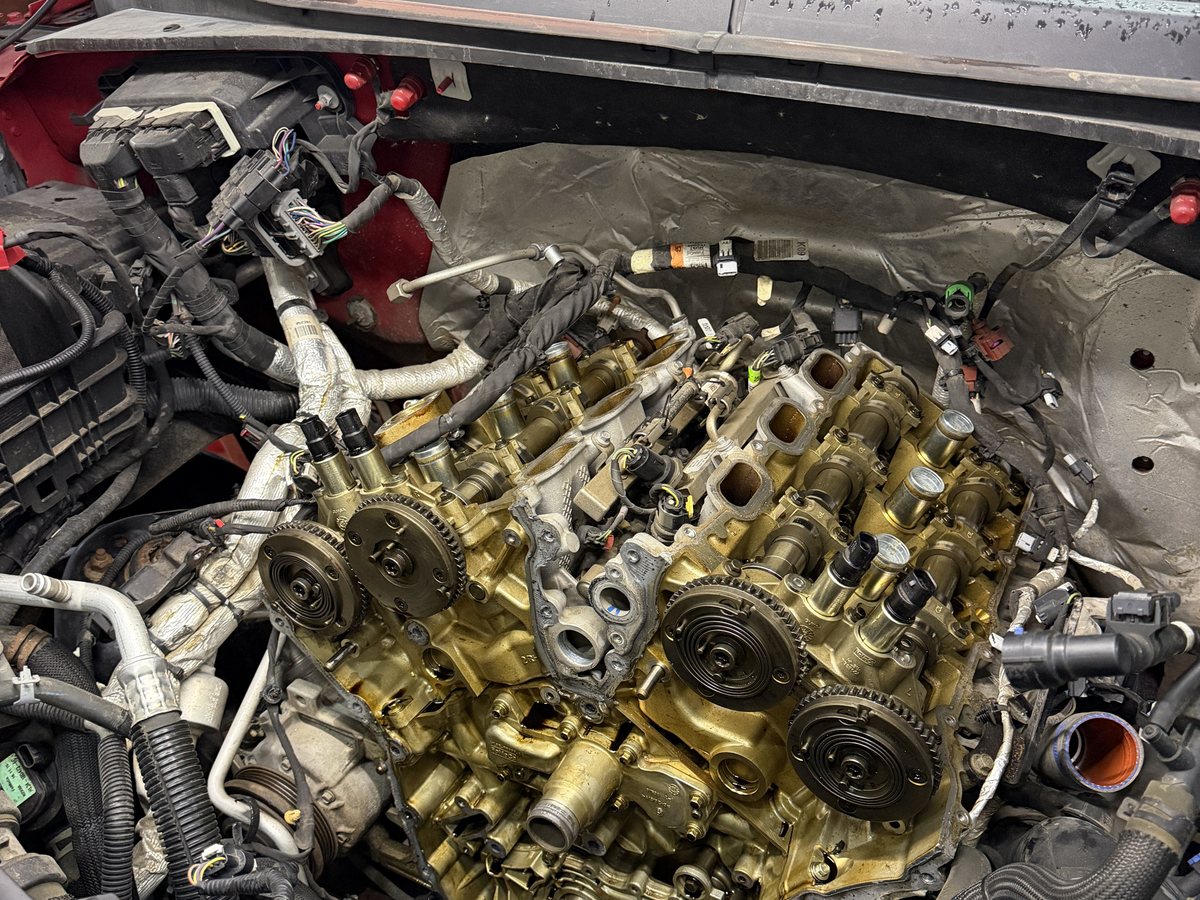
Noises
What an engine noise usually turns out to be
People describe engine noises by what they sound like, which is the right way to do it. This is the translation we work from, and it is where diagnosis starts rather than where it ends.
| What you hear | When you hear it | What it usually is |
|---|---|---|
| A light tick, like a sewing machine | At idle, warm, steady with engine speed | Valvetrain. Lash adjusters, a worn follower, or on some engines an injector that is simply loud. Often normal, sometimes not, and the difference is worth confirming rather than assuming. |
| A deeper knock | Under load, worse when accelerating | This is the one to stop driving for. It can be pre-ignition from the wrong fuel or a bad sensor, and it can be a bearing. The cheap cause and the expensive cause sound alike from the driver's seat. |
| A rattle for a second or two on cold start | First start of the day only | Oil pressure taking too long to reach the top of the engine, or on a chain-driven engine a tensioner that is not holding. Chains give plenty of warning and then very little. |
| A whine that rises with engine speed | Any time, changes with revs not with road speed | Usually an accessory: alternator bearing, power steering pump, idler pulley. Belt off, spin each one by hand, and it identifies itself in about five minutes. |
| A squeal that stops when it warms up | Cold, first few minutes | Belt or tensioner. Belts are a wear item and a glazed one will slip long before it breaks. |
| A hiss with a rough idle | Idle, sometimes with a check engine light | A vacuum leak. Intake gaskets, a split hose, or a PCV system that has failed. This is the noise that also throws a lean code and sends people chasing fuel parts. |
The reason we ask when you hear it rather than just what it sounds like is that the same noise means different things cold and warm, at idle and under load. If it only happens once a day, a recording on your phone is more useful than anything else you can bring us.
Worth knowing
A flashing check engine light is not the same light
Steady means a fault is stored and you can book it in. Flashing means raw fuel is going down the exhaust right now and the catalytic converter is being destroyed while you drive. A flashing light turns a spark plug into a converter, and the difference is measured in miles.
What The Engine Is Telling You
Six symptoms worth acting on early
Engines give a lot of notice. The expensive repairs are almost always the cheap ones that were left alone.
A flashing check engine light
Steady means a fault is stored. Flashing means raw fuel is going into the exhaust right now and the catalytic converter is being destroyed as you drive. Flashing is a stop-driving symptom.
A rough idle that smooths out on the move
A misfire under light load. Usually a coil, plug or injector on one cylinder. Cheap while it's one cylinder, less cheap once the converter has taken the damage.
Oil spots where you park
Find the source rather than topping it up. A valve cover gasket is a modest job; the same leak dripping onto a hot exhaust for a year is a different conversation.
White smoke that doesn't clear when warm
Steam on a cold start is normal. Sweet-smelling white smoke after the engine is hot means coolant is getting into a cylinder, and that's a head gasket conversation.
A rattle for a second or two on a cold start
Often timing chain tensioner or guide wear. It's a noise that gets dismissed for months, and it's the one that turns into a very large bill if the chain jumps.
Coolant disappearing with no puddle
It's going somewhere. If it isn't on the driveway it's going into the engine or out of the exhaust, and a pressure test will show which.
Diagnosis First
A code is a symptom, not a diagnosis
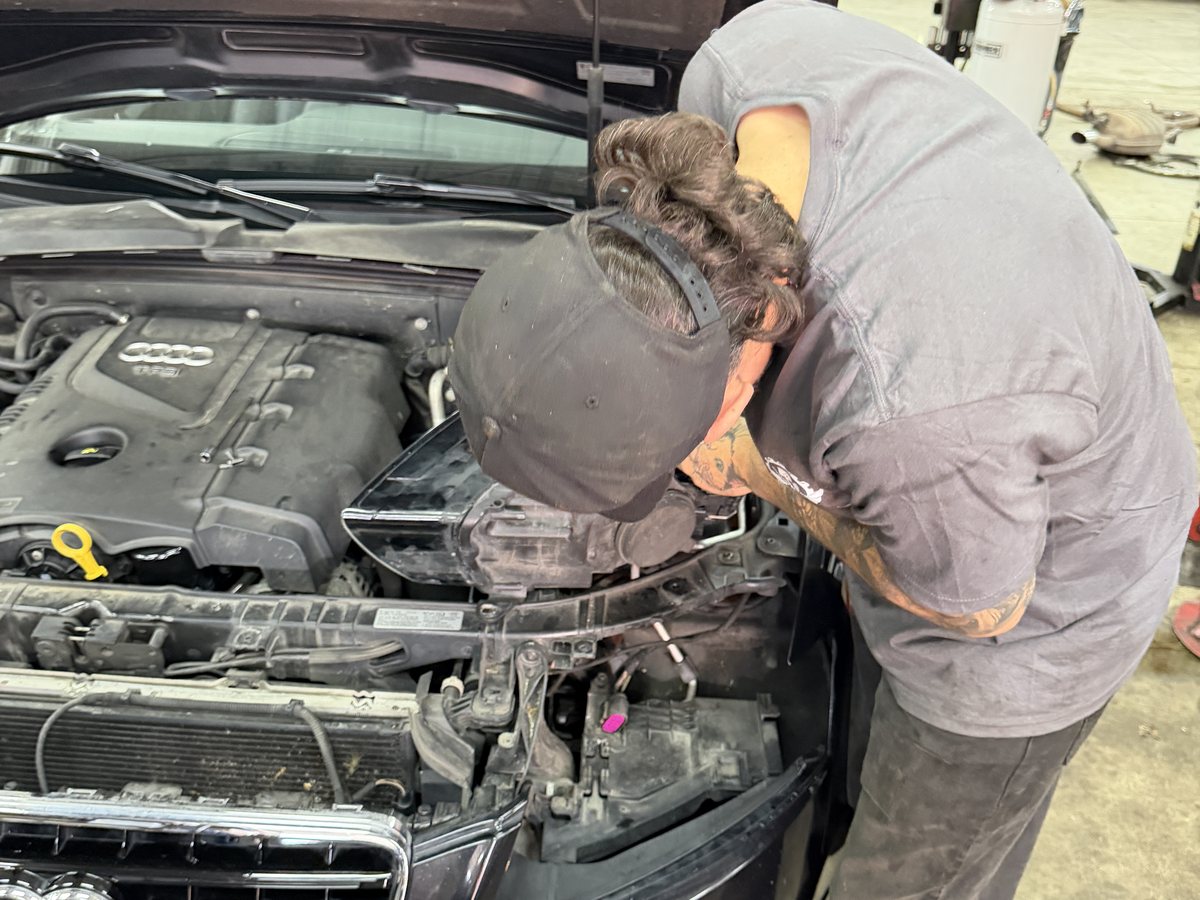
A stored code such as a misfire on cylinder four tells you which cylinder is unhappy. It doesn't tell you whether that's a coil, a plug, an injector, a vacuum leak, low compression or a wiring fault. Replacing the part named in the code description is guessing with your money.
So we test. Live data while the engine runs, fuel trims to see what the computer is compensating for, a compression or leak-down test when the numbers point at the cylinder itself, and a smoke test when a vacuum leak is in play. Each of those either confirms or eliminates a cause.
That process costs time up front and saves money twice: once because the right part gets replaced the first time, and again because you aren't paying for a coil, then plugs, then an injector, chasing the same misfire through three visits. When the honest answer is that a repair costs more than the car is worth, we'll say that too.
Most engine jobs begin as something smaller. A check engine light gets a diagnostic test before anyone talks about a teardown, a lean condition is often the fuel system rather than the engine, and an overheating complaint can be as simple as a fan or as serious as a head gasket. Regular oil changes with the right oil are still the cheapest engine repair there is, and on diesel engines the intervals and oil specs are different again.
How We Approach It
From symptom to repair
Nothing gets ordered until we can say why.
-
Listen to the actual complaint
When it happens, how often, hot or cold, under load or at idle. Half of engine diagnosis is knowing which condition to recreate.
-
Scan and read live data
Stored and pending codes, freeze frame, fuel trims and sensor values while it runs. The data from a running engine says far more than the code list.
-
Test the specific system
Compression, leak-down, fuel pressure, smoke test for vacuum leaks, or a cooling system pressure test. Whichever one answers the question.
-
Quote the repair with the reasoning
You get told what failed, how we know, what it costs, and what happens if it waits. No surprises on the invoice.
-
Repair, then verify
The fault is cleared and the car is driven and re-scanned to confirm the fix held under the same conditions that caused it.
Questions
Engine repair questions
My check engine light is on but the car drives fine. Do I need to come in?
Why do you charge for diagnosis?
Is it worth repairing an older engine?
What is a misfire actually doing?
Do you do timing chains and head gaskets?
Can you work on my make?
How long will it take?
What You Get
Engine work here includes
- A real diagnosis before any parts
- Live data and freeze frame review
- Mechanical testing where the data points
- Written explanation of what failed and why
- Quality parts suited to your engine
- Post-repair verification drive
- A complimentary multi-point inspection
- Limited lifetime warranty on most repairs
Related Work
What engine faults touch
In Their Words
What customers say about the engine work
★★★★★
I worked with Scott Brown and his technical team and trying to diagnose a leak underneath my Mustang. They did terrific job of cleaning the bottom of the car and locating the lake which we thought was in the axle area but actually was coming from the engine. Scott and the team are very professional
★★★★★
Exceptional customer service by the team at First Call Auto Care. Making an appointment was easy and so was the checking in process. They communicate with you along the way so you are informed. I had a check engine light on my Mercedes. The problem was diagnosed and resolved at an affordable price.
★★★★★
Superior customer service with honest and extremely reasonable pricing - this sums up just a couple of the excellent qualities that First Call Auto Care provides to customers. I trust them to work on any vehicle in my fleet - both work and personal. From wiper blades to engine replacements, this shop can do it all!
Book It
Something not right under the hood?
Bring it in and we'll find out why before anything gets replaced. 29444 Woodward Ave, Royal Oak. Book online or call the shop.